Premium Enclosed Car Shipping & Auto Transport (2026)
Enclosed car shipping is a specialized freight service that transports classic, luxury, and high-value vehicles inside a fully covered, weather-sealed trailer. Built for exotic car owners, serious collectors, and high-stakes dealership trades, this service guarantees maximum security. You get hydraulic lift-gate loading, climate-protected transit, and massive million-dollar cargo insurance limits. Whether you need to move a low-clearance hypercar or are simply shipping your car across the country and refuse to compromise on safety, covered transport delivers total peace of mind.
Get Your Instant Enclosed Car Shipping Quote Today
Your high-value asset deserves more than a bumpy ride on an exposed wedge trailer. Our specialized auto logistics network delivers absolute, white-glove protection from the moment we take your keys to the minute we drop the vehicle at your door. We don’t guess. We don’t cut corners. We deploy vetted, top-tier carriers equipped with state-of-the-art covered haulers.
Stop losing sleep over rogue highway debris, violent weather systems, and inexperienced rookie operators. If you need a firm, accurate, and honest price to move a rare machine, talk to our dedicated logistics team today. We skip the automated runaround and get straight to the hard numbers.
Call 1-800-706-5914 for VIP assistance. Lock in a guaranteed transport rate right now.
Skip the automated runaround:
VIP assistance. Lock in a guaranteed rate right now.
What is Enclosed Auto Transport?
Enclosed auto transport is a premium vehicle shipping method where cars are hauled inside a fully covered, soft-sided, or hard-sided trailer. This specialized logistics service entirely shields vehicles from rain, snow, heavy dust, and destructive highway debris. It offers a massive upgrade in physical protection and security compared to standard open car shipping.
The Average Enclosed Car Shipping Cost Per Mile (2026)
Moving a car inside a specialized custom trailer absolutely costs more than standard hauling. Why the markup? It comes down to basic math and risk. Enclosed carriers haul far fewer vehicles. A massive open rig might pull ten cars at once. A covered rig maxes out at two to six. Furthermore, these specific drivers carry staggering cargo insurance policies to cover million-dollar payloads.
Based on our live 2026 dispatch desk data, here is a realistic breakdown of comprehensive car shipping costs for covered freight.
2026 Enclosed Cost Matrix
| DISTANCE | MILEAGE | AVERAGE ENCLOSED COST |
|---|---|---|
|
Short Routes
|
1-500 miles | $1.50/mile |
|
Medium
Routes |
501-1,500 miles |
$1.45/mile |
|
Long Routes
|
1,500+ miles | $1.40/mile |
Do I Need Enclosed Car Transport?
Choosing between an open rack and a closed box usually boils down to the actual replacement value of your asset. Standard hauling works beautifully for a daily commuter or an old family sedan. But if you own a machine that turns heads at a stoplight, exotic auto transport becomes non-negotiable.
Ask yourself these four blunt questions to figure out if you truly need to pay for the premium upgrade.
Is it a classic, luxury, or collectible vehicle?
Matching-numbers muscle cars, vintage air-cooled Porsches, and high-end European luxury sedans bleed market value the second their original factory paint takes a hit. If your ride represents a serious financial investment or carries irreplaceable historical value, you absolutely need classic car shipping services. The aggressively high insurance limits on these specific trailers actually match the true appraisal value of your car.
Are you shipping a car with low ground clearance?
Standard metal ramps destroy front splitters. It's that simple. Sports cars, supercars, and aggressively lowered project builds physically cannot drive up a standard steep trailer ramp without brutally scraping the undercarriage. You'll rip the exhaust right off. Enclosed carriers solve this by utilizing specialized hydraulic lift gates. The system keeps the vehicle completely horizontal during the entire loading sequence.
Are you concerned about harsh weather and road debris?
Heavy tractor-trailers kick up loose gravel, jagged retread tire shrapnel, and corrosive road salt at seventy miles per hour. If you move a car from New York down to Texas in the dead of winter, an open trailer leaves it completely exposed to hail, sleet, and magnesium chloride. Covered transport completely seals the environment. Your car rolls off the truck looking exactly as it did when you handed over the keys.
Does the vehicle have custom paint or modifications?
Custom vinyl wraps, pearlescent paint jobs, and delicate aftermarket fiberglass body kits demand serious care. UV exposure alone during a multi-day cross-country run can bake and degrade sensitive custom finishes. Moreover, the soft-tie wheel straps used inside a covered box eliminate the heavy risk of chain scratches and environmental wear on your suspension.
Soft-Sided vs. Hard-Sided Enclosed Trailers: What’s the Difference?
Not all covered trailers roll out of the factory built the same way. When you book a premium run, you’ll generally encounter two very specific types of equipment on the highway. Knowing the difference helps you set the right expectations for your vehicle’s cross-country journey.
Soft-Sided Enclosed Trailers
Soft-sided carriers look exactly like standard rigid box trailers from a distance, but the sides are actually constructed from heavy-duty, industrial-grade canvas. Think of it like a highly durable, taut curtain. These trailers provide excellent, reliable protection from rain, wind, and ambient road dust. Because they are lighter, they run slightly more fuel-efficient for the driver, which often makes them a fraction cheaper to book. However, a canvas wall doesn't offer the extreme, fortress-like physical security of solid metal.
Hard-Sided Enclosed Trailers
This represents the absolute gold standard of auto logistics. Hard-sided trailers feature thick, rigid aluminum or steel walls, solid roofs, and massive locking rear doors. They completely isolate the payload from the outside world. If you are coordinating high-profile auction car shipping pickups for a million-dollar Ferrari or a priceless museum artifact, you demand a hard-sided rig. The heavy metal walls provide impenetrable protection against massive golf-ball-sized hail, flying highway debris, and theft.
Benefits of Enclosed Car Transport with AG Car Shipping
Booking premium door-to-door car shipping inside a covered rig delivers several distinct advantages that directly impact the safety of your investment. We don’t just move cars from point A to point B. We manage high-value freight risk.
100% Protection from Weather and Road Hazards
Sealed walls mean zero physical exposure. No rock chips spider-webbing your windshield. No freak hail damage. No bird droppings burning through your expensive clear coat while parked at a rest stop. The internal climate remains consistent, entirely blocking out the harsh external realities of interstate highway travel.
Enhanced Security and Privacy for Exotic Vehicles
High-profile, brightly colored cars attract immediate, unwanted attention at busy truck stops and state weigh stations. Covered trailers keep your vehicle completely hidden from plain sight. Prying eyes simply cannot see what the truck is hauling. This drastically cuts the risk of targeted theft or vandalism while the driver sleeps overnight.
Higher Insurance Coverage Limits Included
Standard open haulers generally carry roughly $100,000 to $250,000 in cargo insurance to cover the entire ten-car load. That math doesn't work if they are hauling a single $300,000 McLaren. Our specialized carriers hold massive million-dollar policies backed directly by verified Federal Motor Carrier Safety Administration (FMCSA) safety and insurance standards. If the unthinkable happens on the road, your asset is actually covered.
White-Glove Handling & Hydraulic Lift Gates for Low-Clearance Cars
The real danger in auto transport rarely happens at highway speeds. The major damage happens during the slow loading and unloading process.
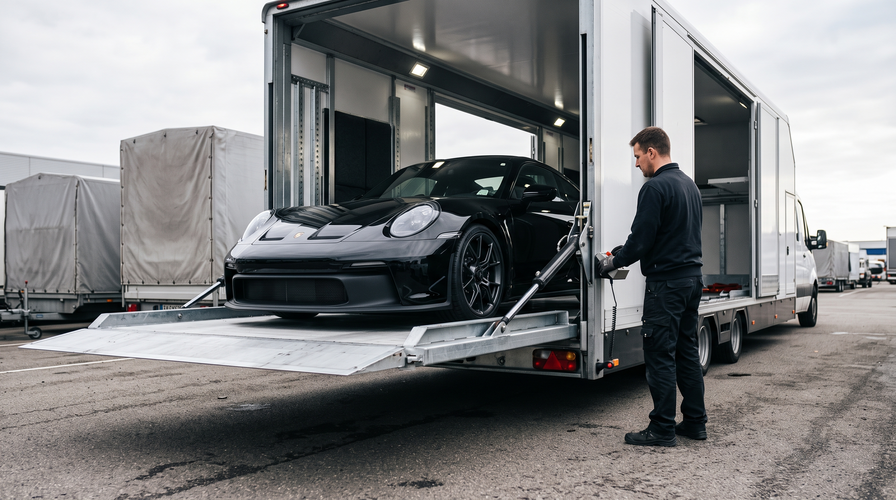
Standard car haulers rely on steep, angled metal ramps. If you own a Lamborghini Huracán, a Porsche 911 GT3, or a lowered Corvette, the nose of the car will violently smash into the ramp before the front tires even make contact. This rips off expensive carbon fiber front bumpers and bends exhaust systems.
The Hydraulic Advantage
Our specialized network utilizes advanced hydraulic lift gates. These mechanical gates act exactly like a mobile elevator. The driver carefully rolls your car onto a flat metal platform resting perfectly flush on the ground. The hydraulic system then lifts the platform straight up, completely horizontally, right into the trailer housing. The approach angle remains entirely flat. We deploy this specific expensive equipment daily on high-volume routes like California car shipping and routine enclosed transport to Florida. Zero scraping. Zero stress.
Why Choose AG Car Shipping for Your Premium Vehicle?
You have dozens of options when moving a car. But high-value logistics requires absolute precision, aggressive carrier vetting, and brutally transparent communication. We handle the heavy, stressful lifting so you never have to guess where your car is on a rainy Tuesday night.
10 Years of Specialized High-End Auto Transport Experience
We know the stark difference between a standard commuter transit run and an irreplaceable asset move. Two decades grinding in the freight broker industry means we have seen every logistical hurdle possible. More importantly, we know exactly how to bypass them. If you need fast expedited car shipping options, we have the historical data to map the fastest route.
Vetted, Enclosed-Only Carrier Network
We refuse to hand your keys to just anyone who managed to pass a CDL test. We actively curate and maintain a restricted, private network of operators who specialize exclusively in covered hauling. They understand the physics of high-end cars. They know exactly how to properly apply over-the-tire soft nylon straps without ever letting a metal hook touch your vehicle's chassis or delicate suspension components.
Dedicated 24/7 VIP Tracking and Support
High-value freight requires real-time data. We provide direct, unfiltered access to dedicated dispatch agents. You get consistent location updates, clear communication regarding unexpected weather delays, and a direct phone line to the exact people actually managing your truck. No endless phone menus. Just straight answers.
How to Prepare Your Classic or Exotic Car for Transport
Handing over an expensive vehicle requires a bit of upfront prep work on your end. Proper preparation drastically speeds up the initial Bill of Lading inspection and completely protects you from future liability disputes. Even for a routine seasonal snowbirds car shipping run, follow these three strict rules before the truck arrives.
1. Document the vehicle's condition with high-resolution photos
Wash the car thoroughly. A clean car clearly reveals existing scratches; a dirty car hides them. Walk around the vehicle with your smartphone and snap high-resolution, well-lit photos of every single panel. Get down and shoot the rocker panels, the roof, the wheels, and the interior dash. Timestamp these images. This serves as your undeniable, bulletproof evidence of the vehicle's exact condition prior to loading.
2. Leave the gas tank at 1/4 full to reduce weight
Gasoline is incredibly heavy. A completely full tank adds unnecessary dead weight to the trailer and creates massive safety hazards. Burn off or siphon the fuel down to a quarter tank. This gives the driver just enough fuel to start the car, load it, and unload it safely without triggering expensive DOT weight scale violations at the state line.
3. Provide the driver with specific starting/handling quirks (chokes, hidden switches)
Classic cars have personality. If your 1969 Mustang requires you to pump the gas twice and hold the key half-turned to start, write it down on a piece of paper and tape it to the steering wheel. If your modern supercar has a complex aftermarket kill switch or a hyper-sensitive immobilizer alarm, physically show the driver exactly how it works. Don't let them sit in the cab and guess.
Real Enclosed Car Shipping Customer Success Stories
Julian Vance (Scottsdale, AZ to Greenwich, CT)
With barely 4 inches of clearance on my GT3’s front splitter, traditional ramps were completely out of the question. AG Car Shipping assigned a carrier equipped with a flat hydraulic liftgate that loaded the car perfectly level. The vehicle arrived in Connecticut completely spotless without a speck of road gravel. If you own a low-profile performance car, their enclosed car shipping is worth every single dollar.
Sep 11, 2026

Richard Caldwell (Austin, TX to Monterey, CA)
Transported my classic Shelby out to California for car week. The driver used non-abrasive over-the-wheel soft straps instead of hooking into the chassis, which gave me immense peace of mind. True white-glove handling, fully sealed from weather, and delivered right on schedule. Hands down the best experience I’ve had with enclosed auto transport.
Oct 11, 2026
Elena Rostova (Miami, FL to Long Island, NY)
I refused to let my G-Wagon take a beating from winter slush and corrosive road salt along the I-95 corridor. Booked AG’s covered trailer service and the truck arrived ahead of schedule. The driver conducted a thorough digital condition walk-around before loading. Seamless, stress-free enclosed car transport for luxury vehicles.
Oct 05, 2026
A lot of brokers advertise low rates and then hit you with surprise low-clearance fees right at pickup. AG gave me a binding rate from day one and dispatched a clean multi-car hard-sided rig within 48 hours. Zero drama, great communication, and honest enclosed carrier car shipping.
Oct 03, 2026
Frequently Asked Questions (FAQs) About Enclosed Car Shipping
Understanding how the car shipping process works shouldn’t require a law degree. Here are the absolute most direct answers to the common questions we hear every single day on the dispatch floor.
How much more expensive is enclosed auto transport compared to open transport?
Enclosed shipping typically costs anywhere from 40% to 60% more than open carrier transport. The notable price increase accounts for the expensive hydraulic equipment, the much lower vehicle capacity per trailer, and the drastically higher cargo insurance premiums the driver must pay.
What is the maximum insurance coverage provided during enclosed transport?
High-end enclosed carriers routinely carry heavy cargo insurance policies ranging from $1,000,000 to $2,500,000. This massive coverage ceiling ensures that million-dollar hypercars, rare auction winners, and priceless museum pieces are fully financially protected against total loss scenarios on the highway.
How many vehicles are shipped together in an enclosed trailer?
Most hard-sided covered trailers haul between two and six vehicles at a time. It heavily depends on the trailer’s total length and internal stacking configuration. Some highly specialized single-car hotshot trailers move just one vehicle for intensely expedited, VIP runs.
Do enclosed car trailers have GPS tracking capabilities?
Yes. The vast majority of modern enclosed truck fleets utilize real-time electronic logging devices (ELD) and advanced GPS tracking. We provide our clients with consistent, accurate location updates straight from the dispatcher so you always know your vehicle’s exact geographical location.
Is enclosed car shipping faster than open carrier shipping?
Not necessarily. Because enclosed trailers carry far fewer cars, the driver makes fewer stops to load and unload other people’s vehicles. This lack of stops can sometimes speed up your final transit time. However, overall delivery speed still depends heavily on the specific route length, interstate traffic conditions, and mandatory FMCSA driver rest periods.
Can I ship personal items inside my car during enclosed transport?
Technically, no. The Department of Transportation strictly prohibits auto haulers from legally moving household goods. Most carriers will allow up to 100 pounds of soft items—like blankets or clothes—locked securely in the trunk. Just know that these personal items are never covered by the carrier’s cargo insurance if lost or damaged.
What happens if my luxury car requires a hydraulic lift gate?
You must explicitly request a lift gate during the initial booking process. We will specifically route your vehicle to a carrier equipped with a fully horizontal elevator-style lift gate. This guarantees your low-clearance car avoids any undercarriage scraping or bumper damage during the loading sequence.
Can I use enclosed transport for a non-running or project car?
Yes, absolutely. However, you will need to pay an inoperable vehicle fee. The driver must use a specialized, heavy-duty winch system to safely drag the dead vehicle up into the trailer. Keep in mind, the car still needs four rolling tires and working steering to be winched properly.
Do enclosed trailers protect vehicles from extreme temperature changes?
While they perfectly block wind, heavy rain, and snow, most standard enclosed trailers are not actively climate-controlled. The internal temperature will fluctuate with the outside environment. That said, it completely eliminates the dangerous wind-chill factor and protects leather interiors from direct, blistering sun exposure.
How far in advance should I book enclosed transport for an auto show?
High-demand routes surrounding major automotive events like Monterey Car Week, Amelia Island, or SEMA book up incredibly fast. We strongly recommend reserving your spot at least three to four weeks in advance. This lead time guarantees an exact pickup window and secures a highly vetted, top-tier carrier.
Ready to Ship Your Car Safely?
Do not leave your prized vehicle to chance. Let our experts handle the heavy lifting. Contact us now for a free, no-obligation quote and experience auto transport the way it should be.
VIP assistance. Lock in a guaranteed rate right now.